

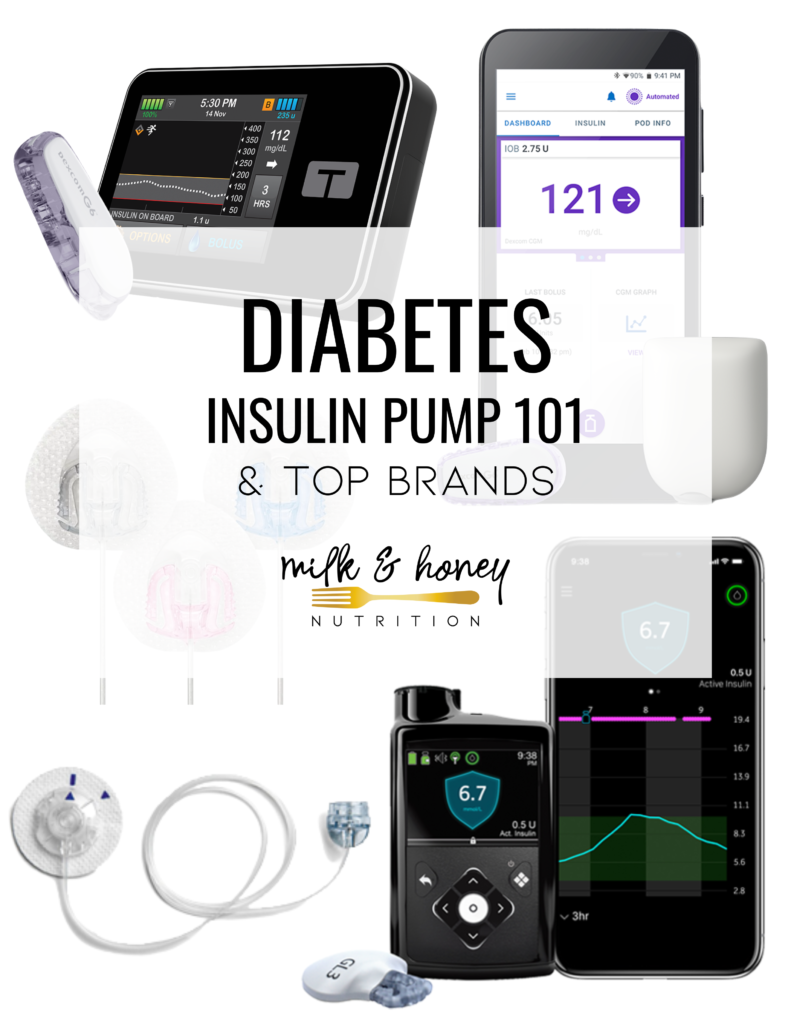
There’s a lot to consider when choosing an insulin pump.
In this article we’ll cover what an insulin pump is, how they work, and the different brand options out there. I also have a helpful table at the end that compares the most common brands available in the United States.
What is an insulin pump?
Insulin injections are necessary for people living with type 1 diabetes and people with type 2 diabetes whose pancreas don’t produce enough insulin. There are options for insulin delivery for these people including:
- Injection by insulin syringes
- Injection by insulin pens
- Insulin patch
- Insulin pump (with tube or a patch)
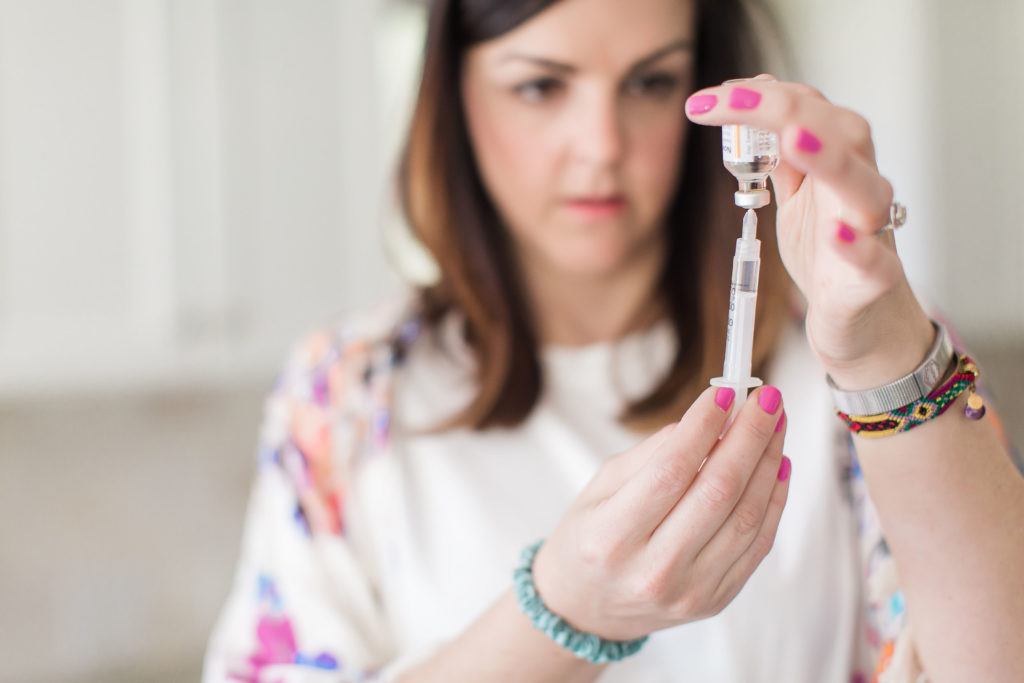
The first two options, which most people think of, is an injection of insulin under the skin with syringes or pen needles. The next option is insulin injections using a manual patch that is worn on the abdomen for 2-3 days. And, the last option is an insulin pump.
***This article is not intended to provide medical advice, diagnosis, opinion, treatment or services. This article and the links contained in it provide general information for educational purposes only. The information provided in this article is not a substitute for medical care, and should not be used in place of the advice of your physician or registered dietitian.
I first started on an insulin pump back in 2003. And, I’ve been on a variety of different pumps since then and have even taken “pump breaks” for various reasons over the years. Currently, I wear the Tandem Mobi System with Dexcom G7 (more on that below) while we’re at home, but I prefer to switch over to the tubeless Omnipod 5 System (also with Dexcom G7) when I’m traveling. We’ve come a long way from the syringes and vials, and massive blood glucose meter I was given at diagnosis in 1991!
After reading through this article, chat with your doctor about what is best for you.
How does an insulin pump work?
An insulin pump infuses insulin under the skin, to help manage glucose levels. Whether its a patch pump, like Omnipod, or a tubed pump that has a cartridge like Tandem Mobi, most pumps can hold enough insulin to last 2-3 days. Depending on the pump, either the insulin cartridge and infusion set (needle or cannula that sits under the skin to deliver insulin), or the patch/pad needs to be changed every 2-3 days to ensure insulin is not getting too hot and the skin does not become over saturated with insulin in the area worn.
An insulin pump delivers two types of insulin doses:
- Bolus: when you eat carbohydrate or correct a high blood sugar
- Basal: continuous infusions every 3-5 minutes (to mimic the natural drip of insulin from a functioning pancreas)
In type 1 diabetes and advanced stages of type 2 diabetes, the pancreas is no longer able to produce insulin, so a basal injection or continuous drip is needed. Pumps infuse a basal dose of insulin every 3 to 5 minutes in an attempt to mimic pancreas activity in order to lower glucose in the blood stream. You can also program the insulin pump to inject a bolus dose (a larger dose) of insulin when necessary, like before eating or when you need to correct a high blood sugar.
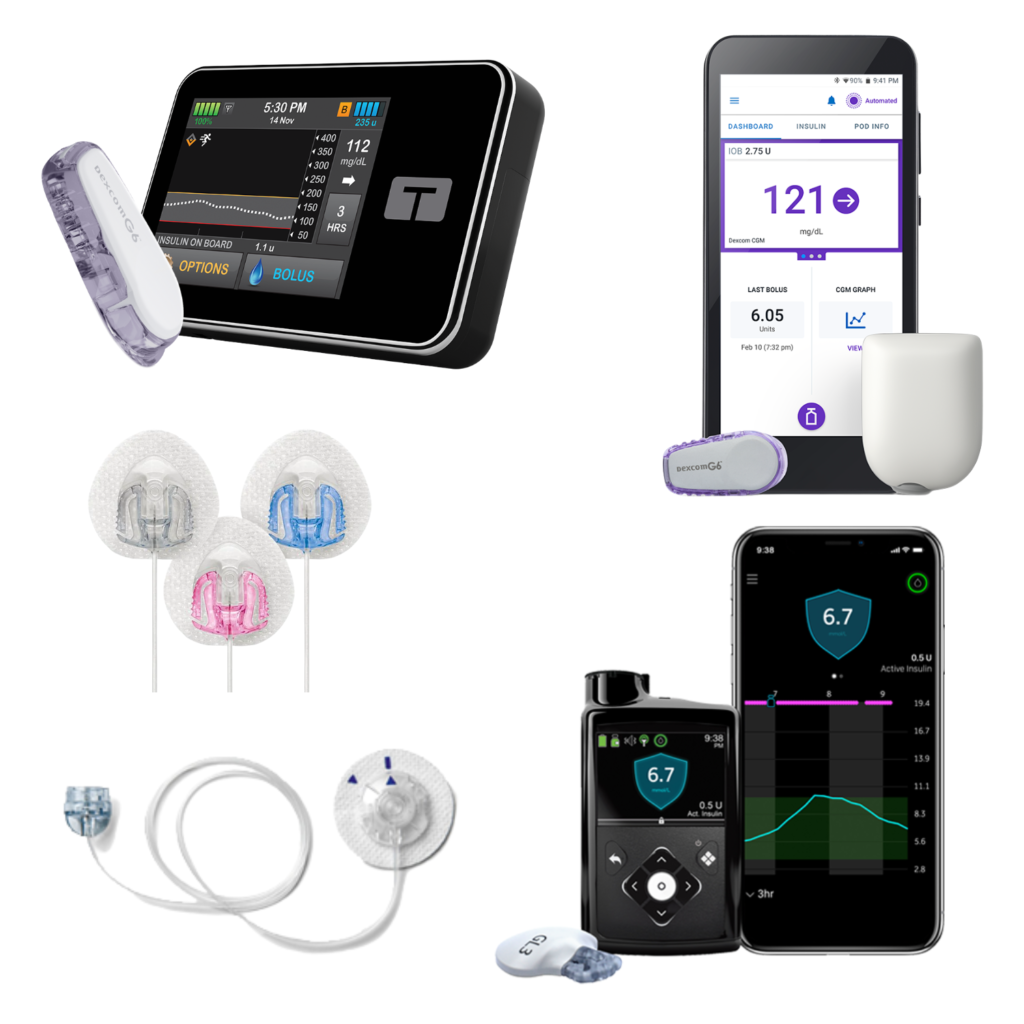
No single method or insulin regimen is a better option than the other. It is person-specific and one regimen might work better for you than others. Setting basal and bolus doses might change from day to day, and hour to hour and can be adjusted. Below we are going to talk about the different types of insulin pumps and how they compare to one another. As always, speak to your doctor with any questions you may have.
2025 Insulin Pump Options
I originally published this article back in 2020, and at that time we really only had three serious contenders in the insulin pump space. Fast forward five years to 2025, and the number of insulin pumps available with some seriously impressive algorithms has dramatically increased… and we expect to see even more options coming to the market in 2026. I’ll give a brief overview of each of the newest pump options from common brands below:
- Accucheck Solo Micropump tube free system has a modular design that allows the user to change their infusion site without wasting insulin.
- iLet Bionic Pancreas is an automated insulin delivery system that simplifies diabetes management by making insulin decisions on your behalf. The most notable feature of the iLet allows users to simply tell the pump they’ve eaten a meal and skip detailed carb counting.
- MiniMed 780G hybrid closed-loop system automatically adjusts and corrects glucose levels every five minutes.
- Omnipod 5 is a tubeless automated insulin delivery system that adjusts insulin every five minutes by automatically increasing, decreasing, or pausing insulin delivery based on readings from a compatible CGM. I currently use this system when I’m traveling… the tubeless patch makes life easier when I’m away from home.
- Tandem Mobi insulin pump with Control-IQ technology is an advanced hybrid closed-loop system that automatically adjusts insulin delivery based on glucose levels using a smart algorithm. It predicts glucose levels 30 minutes in advance using CGM data and can reduce or stop basal insulin to prevent lows, or increase it and deliver correction boluses to help prevent highs. This is the system I currently use.
- Twiist by Sequel is for people with type 1 diabetes aged 6 and up, automating insulin delivery using real-time CGM data, predicted trends, and user settings. It offers flexible, personalized therapy with simple settings, discreet wear options, full iPhone control, and Apple Watch bolus delivery.
Insulin pump comparison chart and overview
| Accucheck Solo Micropump | iLet Bionic Pancreas | MiniMed 780G | Omnipod 5 | Tandem Mobi | Twiist by Sequel | |
| Water proof | No | Yes | Yes | Yes | No | No |
| Approved for us in the US | Yes | Yes | Yes | Yes | Yes | Yes |
| Power source | Battery | Charge via a wireless charging pad | AA battery | N/A | Charge via a wireless charging pad | Rechargeable lithium battery |
| Interface: pump, smartphone or PDM | PDM | Pump | Pump, Smartphone, and Apple Watch | Smartphone or PDM | Smartphone, Pump | Pump, Smartphone, Apple Watch |
| Tubing or tubeless | Tubeless | Tubing | Tubing | Tubeless patch | Short or long tubing | Tubing |
| Units held | Up to 200 | Up to 180 | Up to 300 | Up to 200 | Up to 200 | Up to 300 |
| Length of wear before site change | 4 days | 3 days | 3 days | 72 hours + 8 hour grace period | 3-4 days | 3 days |
| Integrates with CGM | No | Yes: Dexcom G6 and G7, Freestyle Libre 3 Plus | Yes: Guardian 3 and 4 sensors | Yes: Dexcom G6 and G7, and Freestyle Libre 2 Plus | Yes: Dexcom G6 and G7, and Freestyle Libre 2 Plus and 3 Plus | Yes: Freestyle Libre 3 Plus, and Eversense 365 |
| Closed loop system | No | Yes | Yes | Yes | Yes | Yes |
| Automatic correction doses | No | Yes | Yes | No | Yes | No |
| Unique features | “Pen-therapy mode” allows temporary switches to an insulin pen without losing data | Fully autonomous meal, basal and correction algorithms that work together to keep the user in range. Requires minimal input from user | MiniMed Mobile app allows patients to easily track sugar levels and get notified on their phone or Apple Watch if they are going high or low. | Omnipod 5 does not give corrections boluses, but instead automatically adjusts basal rates based on input from CGM data every 3-5 minutes. | Tandem Mobi’s small size means it can fit in a small pocket (coin pocket), be clipped to clothing, worn with an armband or attached via an adhesive sleeve that attaches to the body. | Twiist allows for a lower target glucose (87-180 mg/dL) than other insulin pumps. |
| Website to learn more | https://www.rochediabetescaremea.com/me/solo/micropump-ar-en.html | https://www.betabionics.com/hcp/ | https://www.medtronicdiabetes.com/products/minimed-780g-insulin-pump-system | https://www.omnipod.com/ | https://www.tandemdiabetes.com/# | https://www.twiist.com/ |
Pump supplies
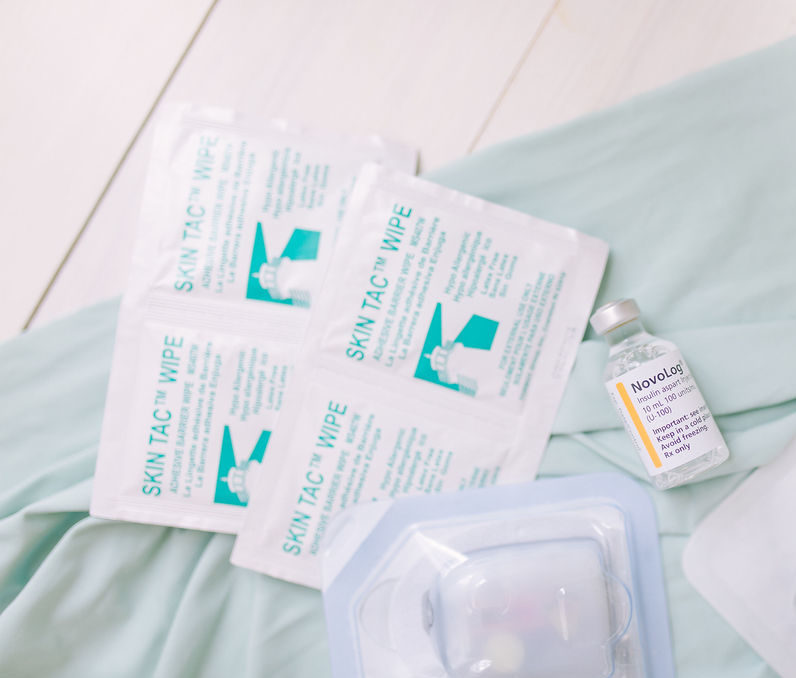
The initial cost of an insulin pump can be quite large. Most new insulin pumps (without insurance) range from $4,000-$12,000. But, it’s also important to factor the monthly supply cost for infusion sets, cartridges and/or pods. Monthly supply costs can range from $300-$600 cash price. (This will change based on your level of insurance coverage.)
Insulin pump accessories
There’s also numerous ways to personalize your pump through fun adhesion tapes, cool covers/protectors, and carrying cases. Some of my favorites include:
- Skingrip Patches for infusion sites, pods, and CGMs (affiliate link)
- Expression Med CGM and Pump tapes
- SPIbelt for pump or CGM PDM or Smartphone (affiliate link)
Choosing to go on an insulin pump and subsequently which type of insulin pump is right for you is a very personal choice. Seek out support from loved ones and your health care professionals.
Sources
- Insulin and Other Injectables, American Diabetes Association, (2025).
- Find & Compare Insulin Pumps. Danatec ADCES, (2025).
This post was originally published in November 2020, and was updated in July 2025 to reflect current technology.




2 Responses
There is a ton of useful info in here. I was recently diagnosed with type 2 diabetes and I was shocked when my nurse practitioner said that she was wanted to get me started on an insulin pump. My A1C was 8.8 and I had heard that insulin was very rarely used as an initial treatment for people who had an A1C of less than 9.0. She told me that there is a lot of new research suggesting that T2D patients who start insulin early (or at the time of diagnosis) are having better outcomes. I am definitely still in the process of getting used to this (it is a BIG change to have something connected to your body, and that’s in addition to the CGM). I guess I do feel somewhat better knowing that my blood sugar is being controlled automatically and that my NP can see all of my data that gets uploaded. I am nearly a month in and I have gained some weight (3.8 pounds) which is a little concerning although most of it came in the first two weeks. Something we are monitoring, though. Again, thank you for the information in this article and I am sure there may be others like myself who find themselves on insulin sooner rather than later after a new T2D diagnosis.
I’m so glad I found this blog post! I’ve been looking for information about diabetes insulin pumps for a while now. I’m currently using a Medtronic pump and I’m really happy with it. I’m looking into the