
How to travel confidently when you’re flying with type 1 diabetes!
Why This Guide Matters When Flying With Type 1 Diabetes
Flying with type 1 diabetes (or any insulin-dependent diabetes) comes with extra logistics. Airport security, insulin transport, time zones, and blood sugar fluctuations all add up. Once you know what to pack and what to tell the screeners, the trip becomes way less stressful.
My Experience Traveling With Type 1 Diabetes
I’ve lived with type 1 diabetes for over 30 years, and flown many times. Diabetes tech and TSA/airport processes have changed a lot.
When I’m prepared and clear about what devices I’m wearing, what I’m carrying, and how to talk to the TSA agent, flying with type 1 diabetes tends to be pretty low-stress. One bad screening experience? Sure, but it was likely poor training, not a rule issue.
Want to learn more about traveling with diabetes? Check out this post here.

TSA Insulin Rules & Traveling With Insulin: Airport Security Essentials
What the TSA Allows When You’re Flying With Type 1 Diabetes
- According to the American Diabetes Association (ADA), diabetes-related supplies, equipment, and medications, including insulin, vials/pens, pumps, continuous glucose monitors (CGMs), are allowed through the checkpoint, even if they exceed the typical 3.4 oz/100 mL liquid limit. (American Diabetes Association)
- From the Transportation Security Administration (TSA) itself: insulin in any form is allowed in both carry-on luggage and checked bags (though you should keep it in your carry-on when you’re flying with type 1 diabetes). (Transportation Security Administration)
- The TSA also states that insulin pumps and supplies must be accompanied by insulin, and you must notify the officer if you have a device attached to your body. (Transportation Security Administration)
- Exemptions: yes, the standard “3-1-1 liquids rule” (3.4 oz rule) does not apply to medically necessary liquids like insulin or carbohydrate treatments for low blood sugar. (UT Southwestern Medical Center)
Key Heading: TSA & Insulin Rules You Must Know
- Declare your insulin, pumps, CGMs, and supplies at security checkpoints. Don’t hide them.
- You can send insulin or supplies in checked baggage, but you shouldn’t when traveling with type 1 diabetes. Reasons: the temperature/pressure in the cargo hold can degrade insulin, and risk of lost bag. (Also echoed by ADA and other sources.) (Abbott)
- If you wear an insulin pump or continuous glucose monitor, you may be screened by a metal detector, AIT (body scanner), or pat-down. You have the right to request a pat-down instead of going through a scanner if you prefer. (American Diabetes Association)
- If you don’t want your insulin/vials/pens X-rayed, tell the TSA officer you’d like a visual inspection instead. (American Diabetes Association)
How do I take my insulin on a plane?
Some of my top tips for transporting insulin on a plane include:
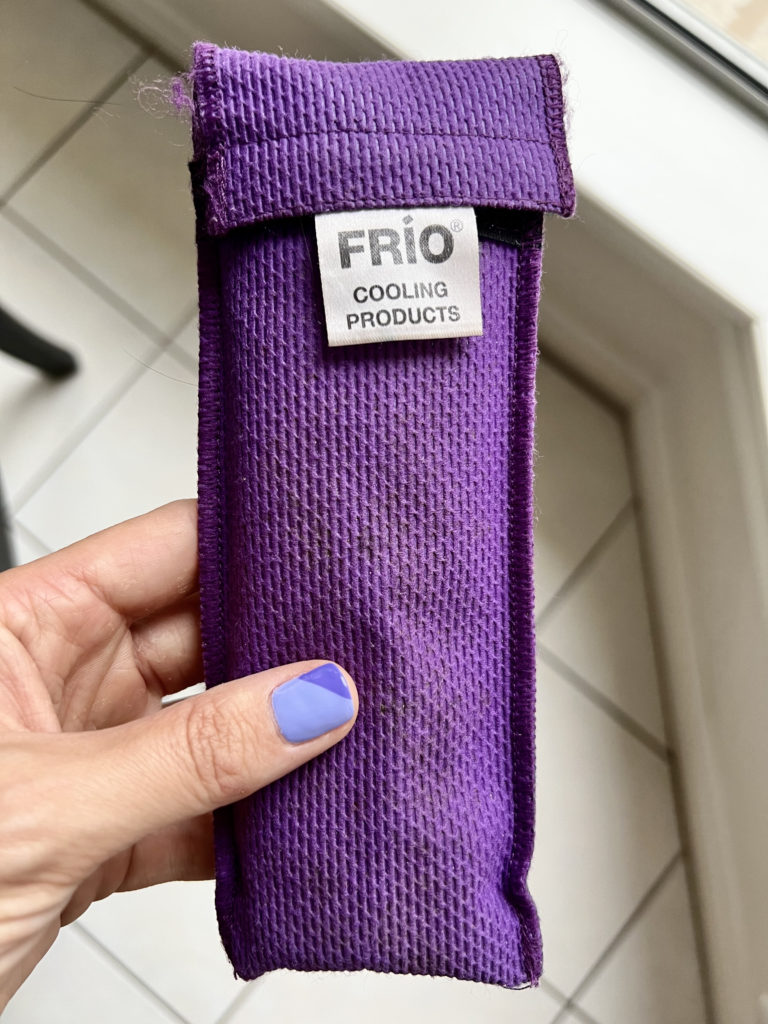
- Use a frio insulin pouch (affiliate link)
- Pack a small lunch kit or pouch (affiliate link) with frozen ice packs
- Use an empty double walled tumbler (like this) (affiliate link) and put insulin inside along with an ice pack
What to Pack When Traveling With Type 1 Diabetes
Packing for Carry-On When Flying With Type 1 Diabetes
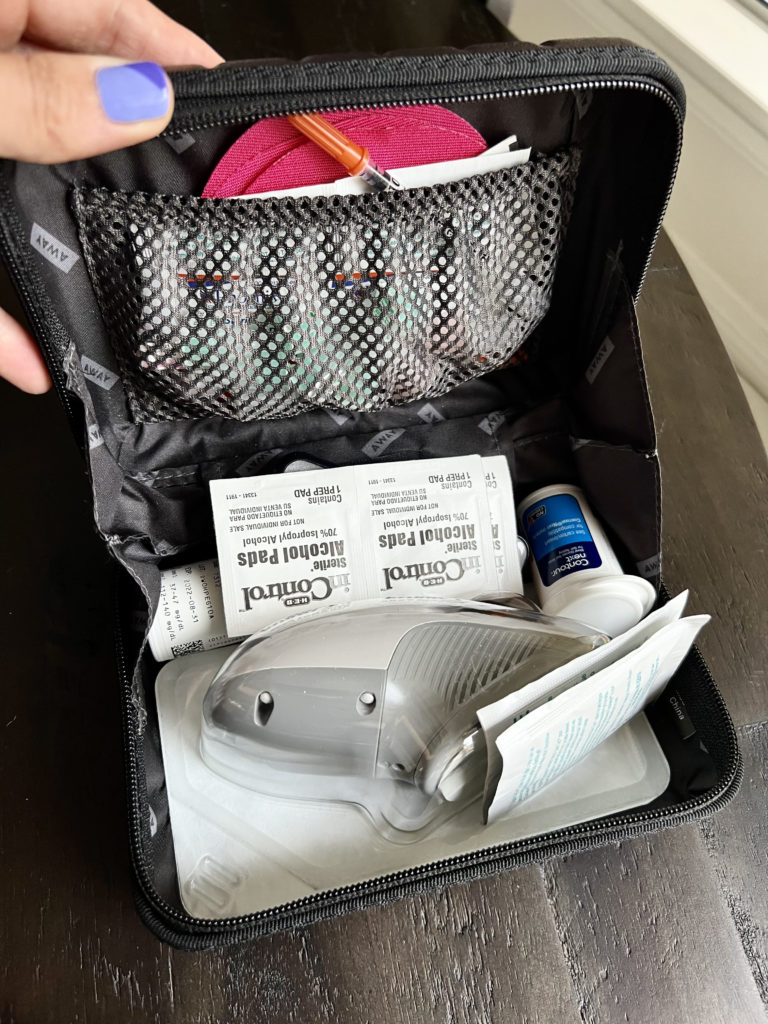
Your carry-on is your lifeline. Here’s what to bring when flying with type 1 diabetes:
- Insulin (vials, pens) and other injectable medications.
- Syringes, pen needles, or infusion/patch supplies for your pump.
- Insulin pump supplies (reservoirs, tubing), CGM supplies (sensors, transmitter, cables).
- Glucometer or blood sugar testing kit, test strips, lancets, extra batteries.
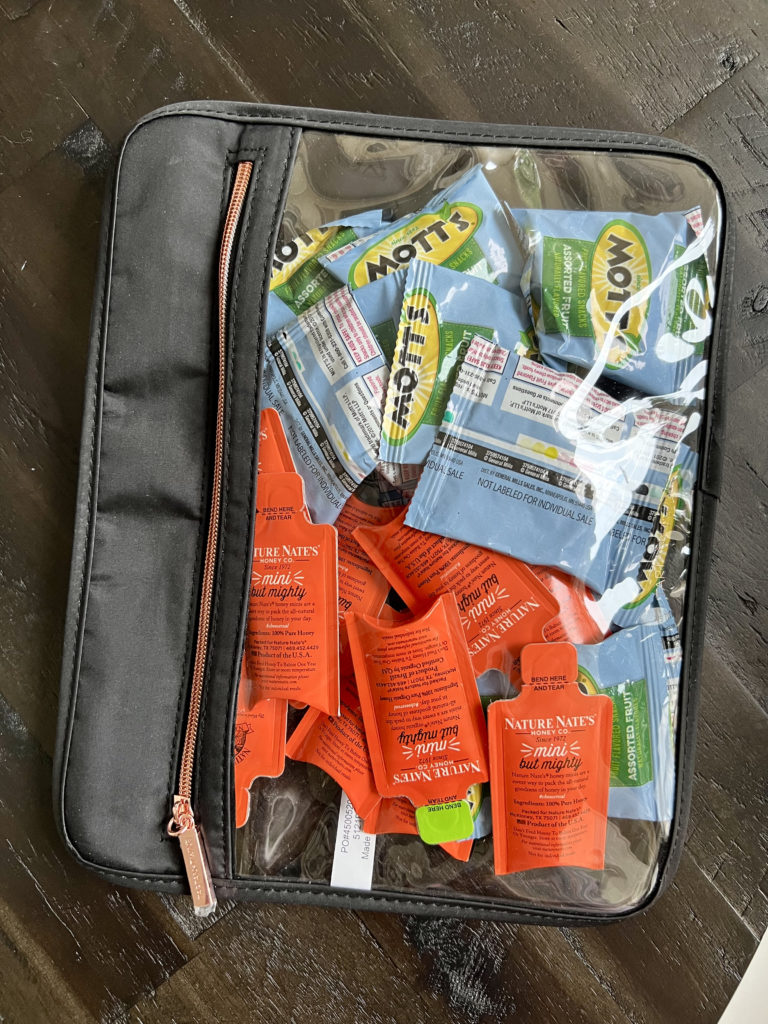
- Low blood-sugar treatments (glucose tablets, gel packs, honey packs), snacks with protein + fiber (for when flights or layovers delay you).
- A cooler pouch or insulated bag for insulin if needed (not frozen ice pack).
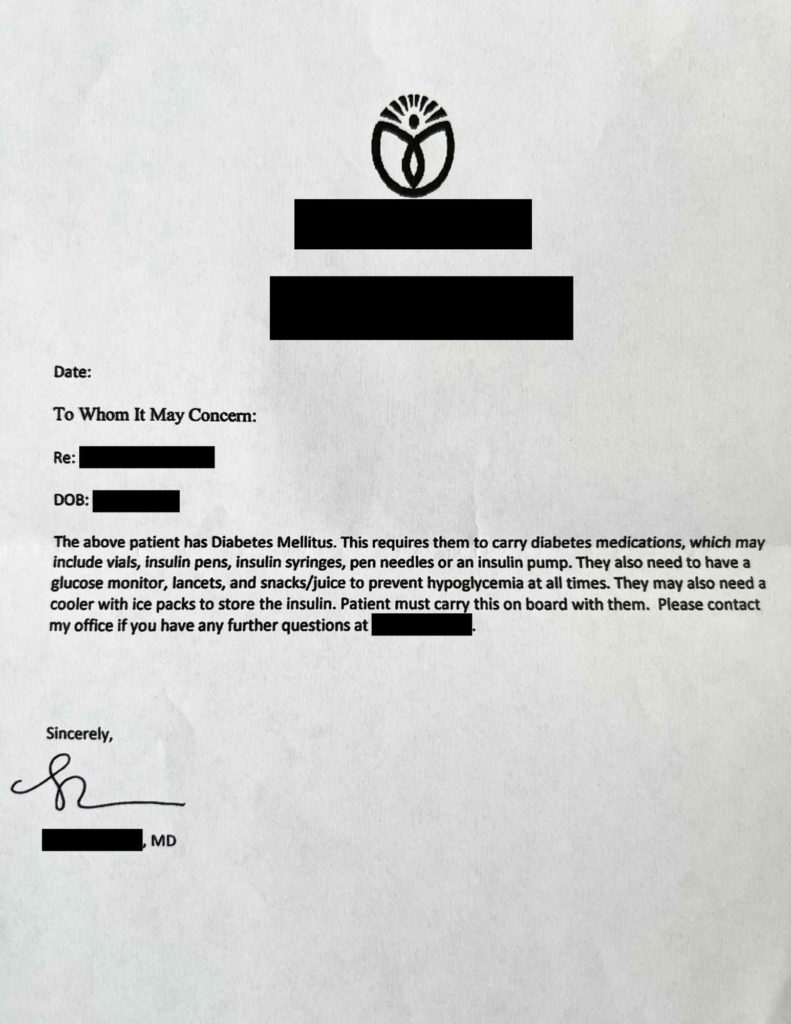
- Doctor’s letter identifying your condition and devices, and an optional TSA disability notification card.
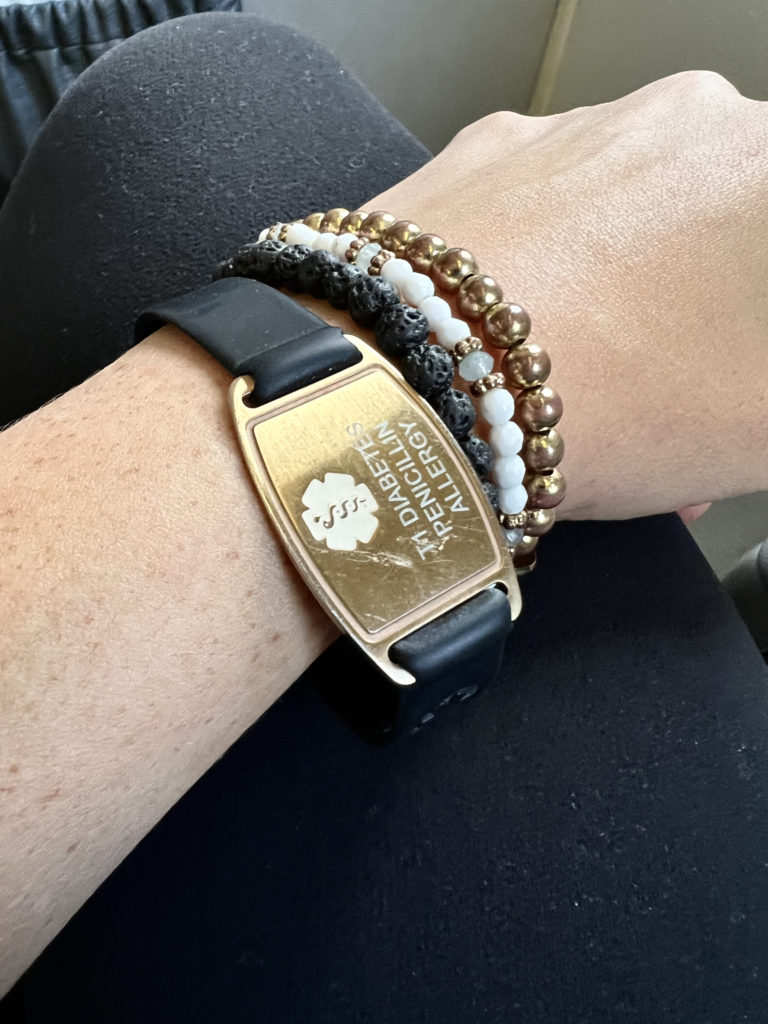
- Medical ID bracelet, contact info for your endocrinologist.
Why Checked Bags Are a No-Go for Supplies
When flying with type 1 diabetes:
- The cargo hold of a plane is not reliably temperature-controlled. Insulin could freeze or degrade.
- If your checked bag is lost, delayed, or mishandled, you may be stranded without critical medical supplies.
- Thus, keep all your essential diabetes supplies in your carry-on.
Buying Extra: Bring More Than You Think
When I travel, I bring at least twice the amount of supplies I’d normally need for the trip duration. Example: if you’re gone for 5 days, pack for 10. Because loss, delays, or tech issues happen.
Getting Through Airport Security When Flying With Type 1 Diabetes
Pre-Security Prep for Flying With Type 1 Diabetes
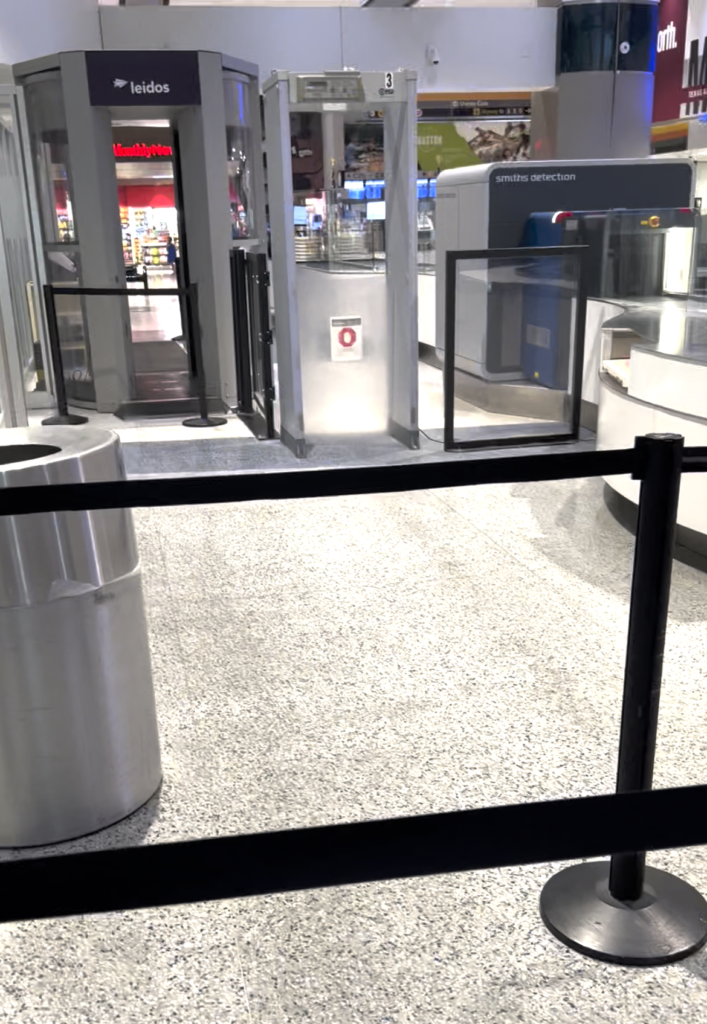
- Notify the TSA agent that you have medically necessary items and devices.
- Consider enrolling in the TSA Cares program (for assistance if you have a medical condition) ahead of time.
- Keep your diabetes-supply bag separate and visible.
- If you wear a pump/CGM: Let the screener know you have the device and whether you prefer alternate screening.
Security Screening Without TSA Pre-Check
- Present your bag with diabetes supplies for “hand inspection” rather than the automatic X-ray machine, if you prefer.
- If you have an insulin pump/CGM, you may request a pat-down instead of going through a full body scanner.
- After screening, gather your supplies and proceed.
Screening With TSA Pre-Check
- Similar to above, but you’ll likely pass through the metal detector rather than full-body AIT.
- You still should notify the agent about your supplies/devices.
Scanners & Devices: Specifics
- Insulin pumps: You do not have to disconnect your pump; you may choose how you’d like to be screened. (American Diabetes Association)
- For insulin: You may request a visual inspection rather than an X-ray.
- CGMs: Check manufacturer guidance re: full body scanners (some devices advise avoiding AIT). Always keep the manual or manufacturer’s guidance handy.
- Carbohydrate treatments/liquids: Clarify with the agent; diabetes-related liquids are exempt from the standard 3.4 oz rule but must be declared. (UT Southwestern Medical Center)
Managing Blood Sugar While Flying With Type 1 Diabetes
Preventing Low Blood Sugar When Flying With Type 1 Diabetes
- Pressure changes during takeoff/landing may cause extra insulin delivery from a pump; some people disconnect the pump during those times (after consulting their endocrinologist).
- Monitor your CGM or BG frequently. Consider a higher alert threshold while flying.
- Always have low-blood sugar treats easily accessible (glucose tabs, gels <3.4 oz if concerned).
Preventing High Blood Sugar When Flying With Type 1 Diabetes
- Sitting for hours + stress + altered routine = risk of elevated blood sugar.
- Pack snacks with protein and fiber; avoid carb-only options when stuck waiting.
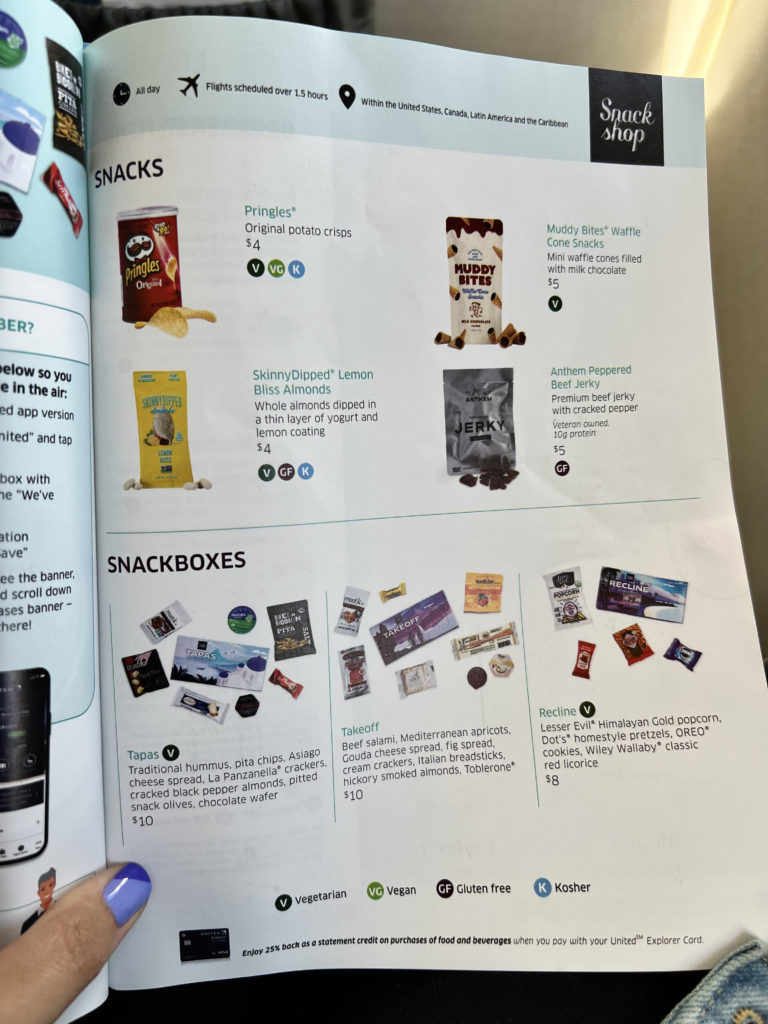
- If you’re relying on airline meals, choose snack boxes with carb counts if available, or bring your own.
Dealing With Time Zones, Jet Lag & Insulin Timing
- Time-zone changes disrupt insulin schedules. The UCLA Health guidelines suggest adjusting pump time in 2-hour increments if the time change is more than 2 hours. (UCLA Health)
- Less sleep = higher blood sugar risk/insulin resistance.
- Walk on the plane, stay hydrated, set alarms for dosing/testing.
Other Travel Considerations When Flying With Type 1 Diabetes
Layovers, Pharmacy Access & Duration of Trip
- Check if your destination (or any layover stop) has pharmacy access in case of emergency.
- How long will you be gone? Double supplies accordingly.
- Traveling alone vs. with someone? Make them aware of your condition.
Snacks, Altitude & Environmental Considerations
- At higher altitudes, oxygen saturation is lower → very slight impact on glucose testing accuracy. (UT Southwestern Medical Center)
- Bring snacks you trust. Airport food can be unpredictable.
- Be aware that if you’re going somewhere with an unusual climate or altitude, these can affect insulin activity.

Final Thoughts on Flying With Type 1 Diabetes
Flying with type 1 diabetes does add a layer of careful planning and awareness, but it doesn’t have to be a barrier. With the right preparation, especially knowing the rules around TSA screening, insulin transport, and device management, you can travel confidently. Pack smart, inform the screeners, monitor your blood sugar levels, and enjoy the destination. (Yes, you still get to have fun.)