


In this article, we cover how to read food labels for blood sugar levels. And, we look at how to use the information on the label to make more informed choices. Choices that benefit you and your blood sugar levels.
***This article is not intended to provide medical advice, diagnosis, opinion, treatment or services. This article and the links contained in it provide general information for educational purposes only. The information provided in this article is not a substitute for medical care, and should not be used in place of the advice of your physician or registered dietitian.
How to Read Food Labels for Blood Sugar Levels
Managing blood sugar is one of the most important daily habits for people living with diabetes and for anyone who wants steadier energy and better long-term health. While it’s easy to focus on avoiding sweets or cutting back on obvious “junk food,” the truth is that added sugars and fast-digesting carbs show up in many places. That’s where learning how to read food labels for blood sugar becomes a powerful skill.
When you understand what’s really in the foods you eat, you’re better equipped to balance meals, practice smart carb counting, and make choices that support healthier blood sugar levels. In this post, we’ll break down exactly how to decode a nutrition label and what to look for when your goal is blood sugar control, including key concepts like the glycemic index, low glycemic foods, and portion control.
Food Labels for Blood Sugar: Why They Matter
Every packaged food includes a Nutrition Facts label, but not everyone knows how to use it. For people managing diabetes, that box of information is a roadmap to understanding how a food might affect their blood sugar.
Carbohydrates, sugars, and fiber all influence how quickly glucose enters your bloodstream. A food high in refined carbohydrates and added sugar is likely to spike blood sugar quickly, while one higher in fiber and protein may produce a slower rising, steadier blood sugar response.
Reading labels helps you:
- Compare products more intelligently
- Choose carbohydrates that digest more slowly
- Practice portion control
- Support consistent blood sugar levels
The label also helps you look beyond marketing claims like “natural,” “smart” or “keto” which can be misleading without examining the facts underneath.

How to Read Key Parts of a Nutrition Label
Remember that a nutrition label is a legal requirement on a package. But, understanding how to read food labels for blood sugar management is a practical tool for understanding how a food may affect your blood sugar. Each section of the label reveals different information about how quickly a food may raise glucose levels and how it fits into daily carb counting. Learning how to scan these numbers helps you move beyond guesswork and make confident choices, especially when managing diabetes.
Instead of focusing on just calories or sugar, it’s important to view the entire label as a snapshot of how a food will act in your body. Once you understand what the numbers really mean, you’ll be able to compare foods easily and spot better options at a glance. The sections below break down the most important parts of food labels for blood sugar and how to use them to support healthier blood sugar control.
1. Serving Size: The Starting Point for Everything
The serving size is the foundation of the entire label. All calorie and nutrient numbers on the label are based on this specific amount of food. If you eat more or less than one serving, you’ll need to multiply or divide everything accordingly.
For example, if one serving is ½ cup but you eat a full cup, you’re actually consuming double the nutrient amounts listed on the label.
Key point: The serving size listed contains the amount of nutrients listed below it on the label. If you eat more or less than the listed serving size, you’ll need to do some math to determine how much of each nutrient you’re consuming.
2. Total Carbohydrates: The Main Blood Sugar Driver
Total carbohydrates represent all of the carbs in one serving of food. This includes:
- Starches
- Sugars
- Added Sugars
- Fiber
- Sugar alcohols
- Allulose
For blood sugar management, this is one of the most important numbers on the label. Foods with high carbohydrate counts usually raise blood sugar levels more significantly, especially if they are low in fiber and protein.
But, remember that not all carbohydrates (as they’re listed on the nutrition label) will raise blood sugar levels. For example, allulose and some sugar alcohols don’t raise blood sugar levels, but still have to be counted as part of the total carbohydrate number.
Key point: Usually, if a food is higher in total carbohydrates it’s going to have more of an impact on your blood sugar levels. But, not all carbohydrates impact blood sugar levels. It’s important to look at other sections of the package (like the ingredient list) to determine what types of carbohydrates the food contains.
3. Fiber: Your Blood Sugar Ally
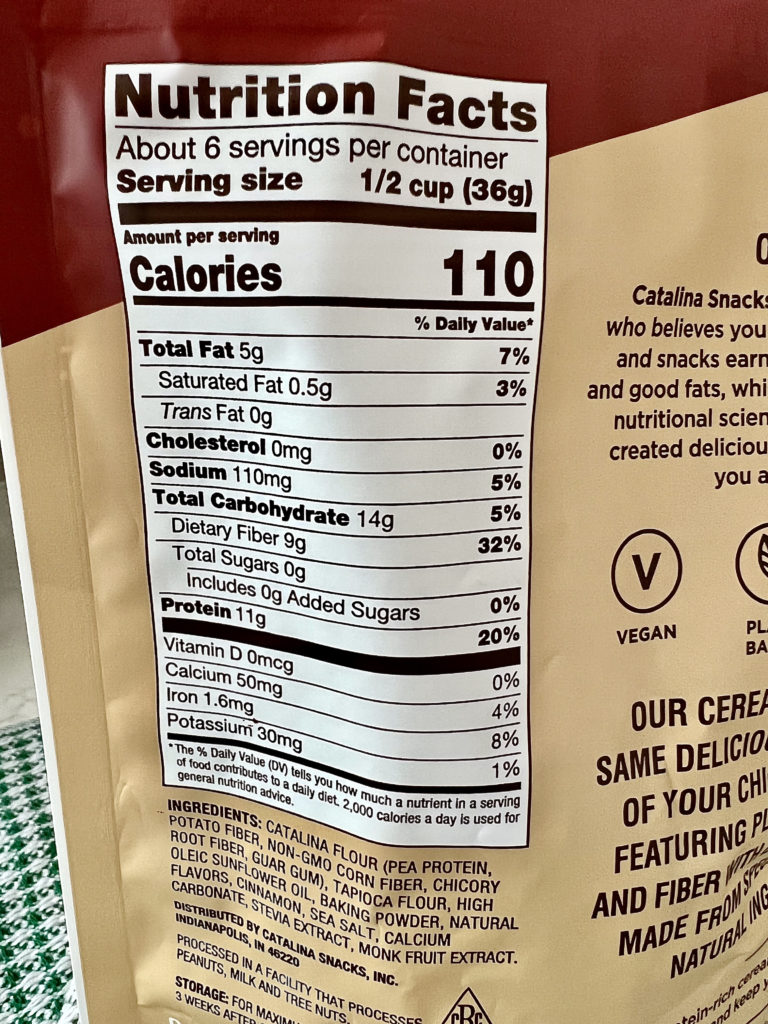
Fiber content plays a major role in blood sugar management. It slows digestion and slows down how quickly sugar can enter your bloodstream. Foods high in fiber tend to be more filling, helping with weight management and appetite control.
Aim for foods with at least:
- 3 grams of fiber per serving (good)
- 5 grams or more (excellent)
Key point: Most of the time, more fiber means a food is going to be better for your blood sugar levels. Fiber is not absorbed by the body and helps support steadier blood sugar levels after eating.
4. Total Sugar and Added Sugar: The Quickest Carbs
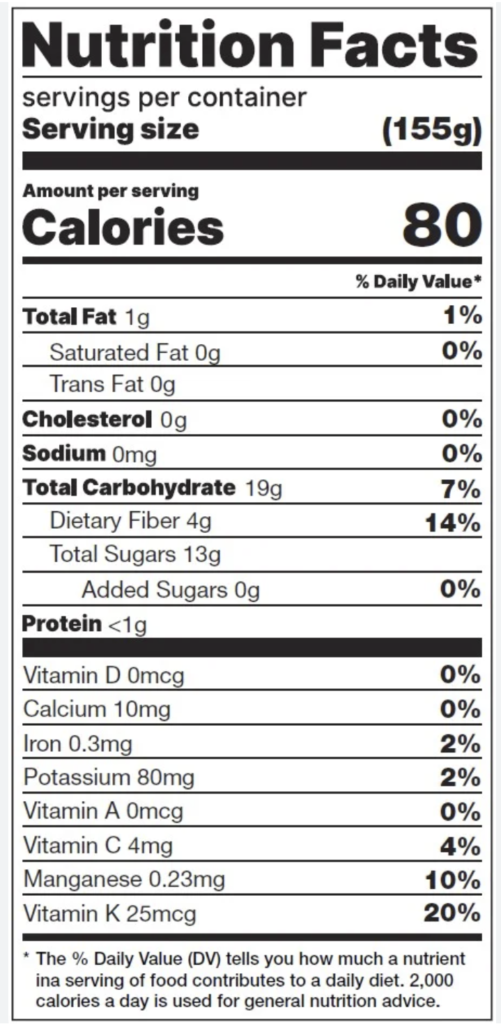
Sugar (both added and natural) is a type of carbohydrate, and is included in the Total Carbohydrate number listed on the label.
For example, in the label pictured below, the 13g Total Sugars are included in the 19g Total Carbohydrate. As the percentage of the total carbohydrate that is coming from sugar increases, the glycemic impact of a food increases and you’re more likely to see unwanted blood sugar spikes.
Also, not all sugars occur naturally. Added sugars are sugars and syrups put into foods during processing, like high-fructose corn syrup, cane sugar, and others.
These added sugars can raise blood sugar rapidly and offer less of a nutritional benefit. The Nutrition Facts label now clearly shows how much of the sugar in a food comes from added sugars.
Key point: Lower total sugars and added sugars are better for blood sugar levels. Zero added sugars are ideal when possible.
5. Net Carbs: A Helpful (But Optional) Calculation
The term net carbs generally refers to the amount of carbohydrate in a food that can actually impact your blood sugar levels. We calculate net carbs by subtracting fiber, sugar alcohols, and allulose from total carbohydrates:
Net Carbs = Total Carbs – Fiber – Sugar Alcohols – Allulose
Some people find this helpful because fiber, sugar alcohols, and allulose do not raise blood sugars in the same way digestible carbs do. Many people use net carbs to get a better estimate of how a food will impact their blood sugar levels.
Key point: We calculate net carbs by using the information given on the Nutrition Facts Label. Net carbs usually refers to the portion of the Total Carbs that will actually impact blood sugar levels.
6. Protein: Support for Steady Blood Sugar
Protein does not raise blood sugar like carbohydrates. When you eat protein along with carbohydrates, it slows digestion and can help reduce sudden spikes in blood sugar after meals.
On a nutrition label, look for foods that provide moderate to high amounts of protein per serving, especially when choosing snacks or packaged meals. Higher-protein options tend to keep you fuller longer, which can also support better portion control.
Key point: Protein slows down digestion and supports stable blood sugar levels.
Understanding the Basics of Carb Counting
Carb counting is a method used by many people with diabetes to track carbohydrate intake to better manage blood sugar. Since carbohydrates have the biggest impact on glucose levels, knowing how many grams you’re eating at each meal is critical, especially if you need to dose insulin or other medications
The number you’ll focus on most is total carbohydrates, listed in grams per serving. As we mentioned previously, that number includes all forms of carbs: starches, sugars, fiber, etc.
While not every gram of carbohydrate affects blood sugar equally, this total provides a starting point for planning meals and insulin dosing (if applicable).
The Role of the Glycemic Index
The glycemic index ranks foods based on how quickly they raise blood sugar. Foods with a high glycemic index (GI) can cause rapid blood sugar spikes, while low glycemic foods lead to a slower, more controlled blood sugar response.
Foods are classified as low, medium, or high GI based on their glycemic index score.
| Low glycemic index foods | 0-55 |
| Medium glycemic index foods | 56-70 |
| High glycemic index foods | >70 |
While the glycemic index isn’t listed on food labels, you can use what you learn from labels to estimate it:
- Low fiber + high sugar = higher GI
- High fiber + lower sugar + protein = lower GI
Choosing low glycemic foods supports better blood sugar stability throughout the day.

Food Labels for Blood Sugar: Putting It All Together
Learning how to read food labels for blood sugar is a skill that gets easier with practice. When deciding what to buy or eat, focus on:
- Serving size that reflects what you’ll actually eat
- Total carbohydrate amount
- Both Total and Added Sugar content
- Fiber
- Protein
These details allow you to make informed decisions, manage diabetes more confidently, and create meals that work with your body instead of against it.
The more you rely on labels instead of slogans and marketing phrases, the more empowered you become. Whether you’re navigating grocery aisles or planning meals at home, understanding food labels is one of the most effective tools for better blood sugar management.